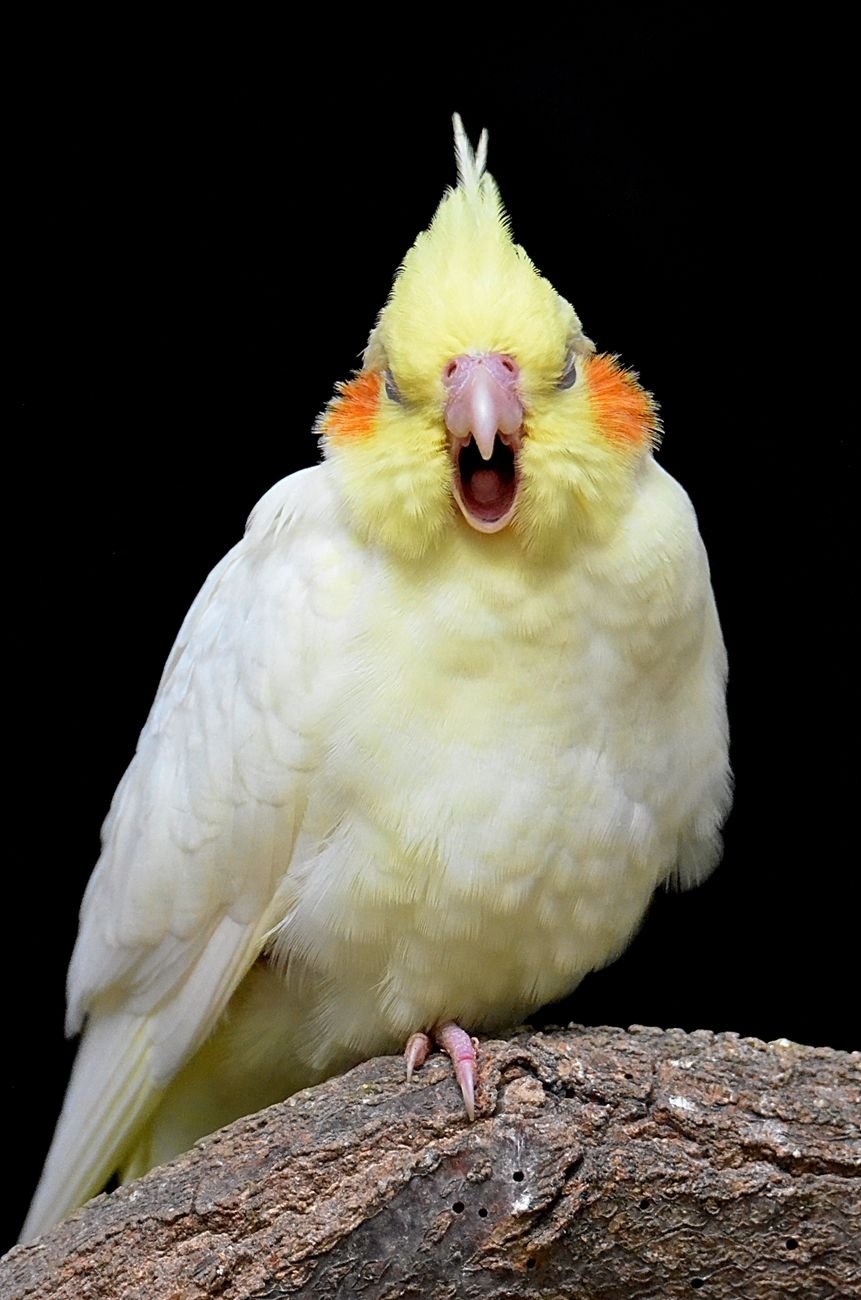
Quick answer: cockatiels bite out of fear, hormones, overstimulation or simple exhaustion - almost never spite. In the moment, the fix is to do as little as possible: keep your hand still, don’t jerk away, put the bird down calmly and end the session. Snatching your hand back teaches your cockatiel that biting works, and punishment makes a frightened bird more defensive, not less.
Wondering whether the bite itself is anything to worry about? That’s covered separately in do cockatiel bites hurt, and are they dangerous? This guide is about why it’s happening and how to stop it.
Why cockatiels bite
A beak is a cockatiel’s hand, its climbing tool and its only real weapon. Work out which of these is driving it and the solution usually follows on its own.
| Cause | What it looks like | What fixes it |
|---|---|---|
| Fear | Bird backs away first, crest flat, lunges only when cornered | Slow down. Go back a stage in trust-building. |
| Territorial | Bites only when your hand enters the cage; fine outside it | Let the bird come out first, then handle. |
| Hormonal | Seasonal, often spring; paired with displays or nesting | 12-14 hours dark, remove nest-like spaces, no back stroking. |
| Overstimulated | Happy play tips over into a nip | End sessions before the bird gets wound up. |
| Overtired | Grumpy, short-fused, bites when approached | Protect 10-12 hours of dark, quiet sleep. |
| Bored | Chews everything, including you | More foraging and shreddable toys, more out-of-cage time. |
| Learned | Bites to make something stop, and it has worked before | Stop rewarding it - see below. |
| Pain or illness | Sudden change in a previously gentle bird | Vet check before behaviour work. |
Not every beak on skin is a bite. Gentle mouthing is how cockatiels explore surfaces and test whether a perch is safe - see why does my cockatiel nibble me? before treating exploration as aggression.
What to do the moment it happens
- Keep your hand still. Every instinct says pull back - don’t. Yanking away removes the thing the bird objected to, which is exactly the outcome it was after.
- Stay quiet and boring. No yelping, no scolding, no dramatic reaction. A big response is interesting, and interesting behaviour gets repeated.
- Put the bird down calmly on its perch and step away for a minute or two. The session ending is the consequence.
- Come back and end on something easy - a treat through the bars, a successful step up - so the last thing that happened was positive.
- Then work out the trigger from the table above, so it doesn’t recur.
What never to do
No shouting, no flicking or tapping the beak, no blowing in the bird’s face, no rattling or covering the cage as punishment, and never drop or shake a bird off your hand. Cockatiels don’t connect punishment with their own behaviour the way a dog might - they simply learn that hands are unpredictable. That belief is the root cause of most biting, so punishment reliably makes the problem worse. How to discipline a cockatiel covers redirection that actually works.
Why is my cockatiel suddenly biting me?
A gentle bird turning bitey is almost always circumstantial. Run through these in order:
- Sleep. The most common and most overlooked. A cockatiel kept up by a television until 11pm is a short-tempered cockatiel. See how much sleep do cockatiels need?
- Hormonal season. Usually spring, often with regurgitating, displaying or shredding paper. It passes - manage the triggers and wait it out.
- Illness or pain. Birds hide sickness, and irritability is sometimes the first crack. Check for other signs in the health symptoms guide.
- Moulting. Growing pin feathers are genuinely tender. Head scratches that were welcome last month may hurt now.
- Something changed. New pet, new person, rearranged cage, different routine, a house move.
Preventing bites before they happen
Almost every bite is announced. Cockatiels give warnings - a flattened crest, a hiss, leaning away, an open beak - and biting is what happens when those warnings get ignored. Learning to read them is the whole skill; the behaviour guide covers the full vocabulary.
- Stop when you’re told. If your bird leans away or hisses, withdraw. Respecting the warning is what stops it escalating to a beak.
- Head and neck only. Stroking the back and tail is a mating cue and a common trigger - see where not to touch a cockatiel.
- Let the bird come out on its own rather than reaching into the cage, which many cockatiels defend.
- Keep sessions short. Finish while it’s going well, not when the bird has had enough.
- Give the beak a job. Shreddable and foraging toys absorb chewing that would otherwise land on you.

- 11 PIECES BIRD TOYS: The bird toys include 11Pieces parrot toys to meet most bird’s needs.Crisp bells’ sounds and colorful wooden toys will catch the attention of your birds,they will spend most time to play with their interesting new toys. they are suitable for bird sports,standing,climbing, playing, chewing, resting,etc. It’s the perfect gift for your bird friends.
- FOR VARIOUS BIRDS:Our bird toys provide your birds a good elevated place to meet your birds’ natural needs; Make most birds do exercise ,strengthen their muscles, exactly suit for small parakeets, cockatiels, conures, macaws, parrots, love birds, Mynahs, finches ,pineapples ect.
- SAFE: These small interesting Bird toys are made of natural wood that dyed with edible color,which ensure the health and safety of your pet birds. They are completely handmade, very durable and bite-resistant. They can easily draw the attention of your pet parrots in a short time,climbbing and exploring.
- EASY TO INSTALL: All bird cage toys come with an hook which can attaches to the top of the bird cage easily.With these interesting bird toys attached in their cage,saving space and decorating the cage, your birds will have fun every day.
- GUARANTEE: If you are not satisfied with our products, just return it and a refund will do; we provide 24 hours customer services, please feel free to contact us.
Rebuilding trust with a biter
If biting has become the normal response to your hand, stop hand contact for a while and rebuild from the bottom. The full sequence is in how to tame a cockatiel, but the short version for a biter is:
- Go back to millet through the bars for a week. Hand still, no reaching, no handling.
- Switch to a wooden dowel or spare perch for step up. It takes fingers out of the equation entirely while the habit fades, and there’s no downside to using one for a few weeks.
- Short daily sessions at the same time. Five minutes, twice a day, beats one long weekly attempt.
- Reward the near-misses. A bird that leans towards your hand and doesn’t bite has done the thing you want. Treat it.
- Reintroduce fingers gradually once the dowel is reliable.
Expect weeks rather than days, and expect setbacks around moults and hormonal seasons. Progress is not linear and that’s normal.
Frequently asked questions
Should I say “no” when my cockatiel bites?
A calm, quiet “no” does no harm, but it isn’t what changes the behaviour - and said loudly it becomes attention, which rewards the bite. What works is the boring response: still hand, calm removal, session over.
Will my cockatiel ever stop biting?
Nearly always, provided the cause is addressed rather than the symptom. Fear-based biting resolves as trust builds; hormonal biting is seasonal; sleep-related biting stops within a fortnight of fixing the bird’s nights. Biting that persists despite all of that deserves a vet check for pain.
Do male or female cockatiels bite more?
Neither reliably. Males tend to be more territorial and display more in breeding season; hens sit tighter and defend a chosen nesting spot. Individual temperament and history matter far more than sex.
My cockatiel bites only one person in the house. Why?
Usually a bonded bird defending its favourite person, or a bad first impression that stuck. The fix is for the disliked person to become the source of good things - they hand out all the millet, run the short sessions, and don’t attempt handling until the bird approaches willingly.